According to the American Academy of Pediatrics (AAP), drowning is the number one cause of death in U.S. children ages 1 to 4 years and one of the top causes of injury death for teenagers. As we enter the summer months, it is important that we understand how to keep children safe around pools and open bodies of water. Morag MacKay, chief research and network officer at Safe Kids Worldwide and past chair of the U.S. National Water Safety Action Plan Steering Committee, provides eight tips for drowning prevention.
One of the key layers of protection from drowning is learning how to swim. In their recent policy statement, the AAP recommended that swim lessons begin after a child’s first birthday but encourages parents to individualize when to begin children’s swim lessons based on the child’s emotional maturity, physical and cognitive abilities and health concerns in discussion with their child’s pediatrician. The AAP also recommends that parents choose swimming lessons that teach their children water safety in addition to swim competency. They also note that skills learned in a swimming pool do not transfer well to natural water, where water conditions differ and additional hazards exist. “And Mom and Dad, if you don’t swim, look at one of those classes where you can learn at the same time as your kids,” says Morag.
Having close, constant and active supervision of children around water by an adult is essential. What makes an effective water watcher? According to Morag, “When selecting a water watcher, ensure the individual understands their role, can swim and has some basic rescue skills as well.” If your child cannot swim or is a weak swimmer, stay within arm’s reach of them at all times.
“If you have a pool or if you’re going on vacation and there’s a pool, you need to ensure that that pool is enclosed by fencing to reduce unsupervised access,” says Morag. “We recommend four-sided fencing with a closing, self-latching gate because there is evidence that it will reduce risk.” Additionally, the AAP states that fences should be at least 4 feet high to prevent climbing. If the pool is not fenced, parents of weak and non-swimmers should ensure closer supervision and consider having kids wear a U.S. Coast Guard-approved life jacket.
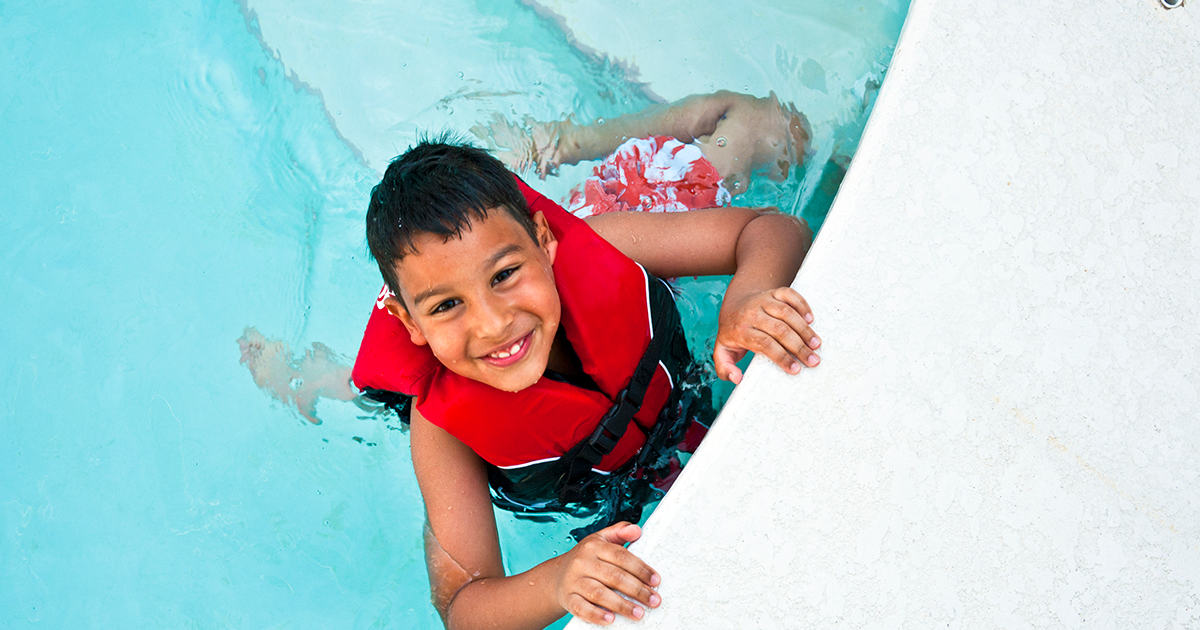
Ensure all children wear U.S. Coast Guard-approved life jackets whenever they are in or on any type of motorized or nonmotorized watercraft. Confirm the child’s life jacket is the correct size for their weight and is both fitted and secured properly. Avoid using inflatable armbands, neck rings or “floaties” as they are not designed to keep children safe.
Parents, grandparents, caregivers and adolescents should learn CPR and safe water rescue skills. In a drowning emergency, every second counts. Having a trained bystander nearby can help keep a person safe until emergency responders arrive and can significantly improve the chances of survival. Learning how to recognize a drowning emergency, call for help, perform CPR and safely assist someone in trouble without putting yourself at risk can save a life. Consider taking a CPR and water safety course through a local hospital, community organization or the American Red Cross.
If you are going to take your kids for a swim, go to a pool with a lifeguard if you can. If it’s an open water area, go to the designated swimming area. Additionally, parents should understand that lifeguards are not there to watch your child. They are there to survey the area and rescue someone if they get in trouble, so having a water watcher is still important.
Morag suggests that if your kids are older, have a conversation with them to set boundaries and expectations regarding pool use. They should check with parents first and always swim with a buddy.
If your child is going to be swimming at another person’s house, ask questions so that you know that the situation your child is going into is safe. These can include: Do they use a water watcher? Do they know child CPR? Is the pool fully enclosed to prevent unsupervised access?
What is the National Water Safety Plan?
After attending the World Drowning Conference in 2017, Morag and other members of Water Safety USA realized that while many countries had or were developing national strategies to prevent drowning, the United States was not. “If this is the leading cause of death for kids between the ages of 1 and 4,” she said, “the fact that this doesn’t get more attention really, really surprises me.” With drowning prevention being one of her passions, Morag raised the question of why there wasn’t a national strategy with her colleagues, and the plan to develop a U.S. National Water Safety Action Plan was set in motion. The plan, which launched in 2023, has the goal of reducing drowning across the U.S. “To reach that goal, we need local collaborators and partners to drive change. The plan provides tools and technical support to people who want to see their community be safer and come together to decide what’s needed locally to reduce the risk of drowning,” explains Morag.