Insights from Dr. Alexandra Gorab, a board-certified pediatrician at Orange Doctors of Kids and Teens in Orange, part of Rady Children’s Health
Extreme heat can turn dangerous quickly for children
As temperatures climb during another stretch of extreme heat, parents and caregivers face added challenges in keeping children safe. Young children are especially vulnerable to heat-related illness because their bodies don’t regulate temperature as efficiently as adults, making it easier for them to overheat and become dehydrated.
Pediatrician Dr. Gorab says knowing what to watch for, and acting quickly, can help prevent a medical emergency.
Know the early signs of heat illness
Heat-related illness often begins with subtle symptoms that can be easy to overlook, especially in children who may not be able to tell you how they’re feeling.
Early warning signs include:
- Thirst (a child who says they’re thirsty is already becoming dehydrated)
- Fatigue or unusual tiredness
- Headache
- Nausea
- Muscle cramps
- Heavy sweating
If heat illness progresses, it can become life-threatening. Seek emergency medical care immediately if a child develops:
- Confusion
- Loss of consciousness
- Seizures
Heat is the number one killer when it comes to weather-related events, making prevention especially important during prolonged heat waves.
Babies and toddlers need extra protection
Infants and toddlers are at greater risk because they cannot regulate their body temperature as well as older children and adults. Since they can’t always communicate how they feel, parents should watch closely for physical signs of overheating.
Warning signs in babies include:
- Fewer wet diapers than usual
- Flushed cheeks
- Fatigue or unusual sleepiness
- Crying without tears
- Changes in alertness or responsiveness
If an infant appears difficult to wake, unusually lethargic, or has altered mental status, call 911 immediately.
Simple ways to prevent heat illness
Keeping children cool and hydrated is the best defense against heat-related illness.
Dr. Gorab recommends:
- Encourage frequent, small sips of water every 10 to 20 minutes rather than waiting until children ask for a drink.
- Spend time in air-conditioned spaces whenever possible.
- Take frequent breaks in the shade when outdoors.
- Limit outdoor time for young infants to no more than 10 to 20 minutes during extreme heat and humidity.
Staying cool without air conditioning
Families without air conditioning can still take steps to reduce heat exposure.
Helpful strategies include:
- Keep blinds or curtains closed during the hottest part of the day to block direct sunlight.
- Open windows when temperatures cool in the evening.
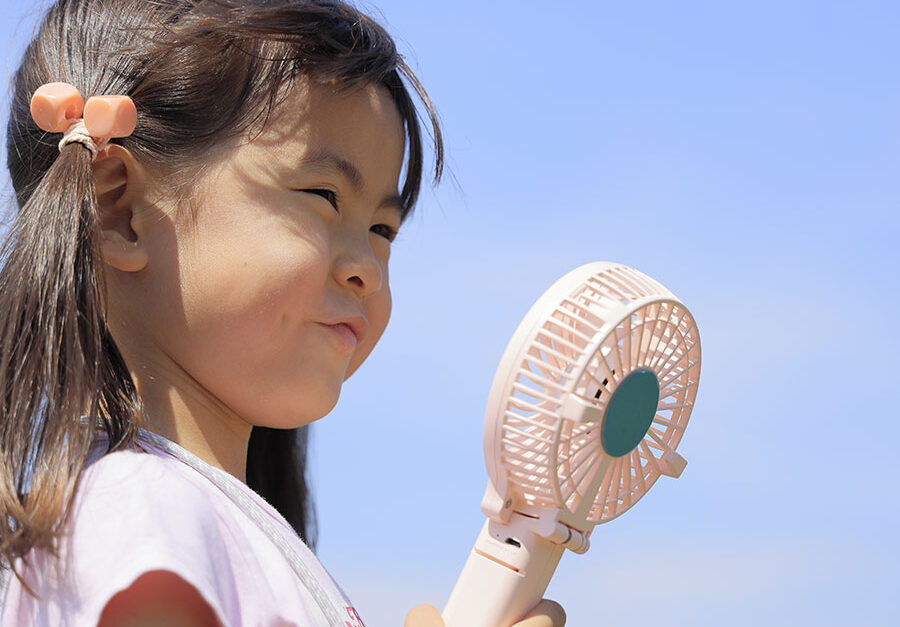
- Use fans to improve air circulation.
- Take cool baths or showers to lower body temperature.
- Visit air-conditioned public spaces such as libraries, shopping malls, or community centers during peak afternoon heat.
Don’t forget sun protection
Sun safety goes hand-in-hand with heat safety.
Dr. Gorab recommends:
- SPF 50 or higher sunscreen for children older than 6 months.
- Reapply sunscreen every one to two hours, especially after swimming or sweating.
- Choose mineral-based sunscreen containing zinc oxide when possible.
- For babies younger than 6 months, rely on shade and UPF-rated protective clothing instead of sunscreen whenever possible.
Pool safety requires layers of protection
Summer also means more time around pools, lakes, and other bodies of water. Drowning remains the leading cause of death for children ages 1 to 4, making constant supervision essential.
The American Academy of Pediatrics recommends beginning swim lessons around age 1, but swimming skills alone are not enough.
Families are encouraged to use multiple layers of protection, including:
- Age-appropriate swim lessons
- Coast Guard-approved life jackets or flotation devices for young or inexperienced swimmers
- Four-sided fencing with self-latching gates around pools
- A designated adult whose only job is supervising children in or near the water
“If everyone is watching, then nobody is watching,” she says.
Another important reminder: drowning is often silent. Unlike what is commonly portrayed in movies, children who are drowning may not be able to call for help or splash dramatically. It can happen in seconds.
If a child is pulled from the water and isn’t breathing normally, call 911 and begin CPR immediately.
Never leave a child in a hot car
Even a brief stop can become deadly during hot weather.
The temperature inside a parked vehicle rises much faster than the temperature outside, creating dangerous conditions within minutes.
Dr. Gorab says children should never be left alone in a vehicle, not even for a minute.
One simple habit can help prevent tragedy: place an essential item, such as your purse, work bag, or phone, in the back seat next to your child. Retrieving that item before leaving the car provides one more reminder to check the back seat every time.
Summer safety starts with prevention
Extreme heat and summer water activities can be dangerous, but many tragedies are preventable. Staying hydrated, limiting heat exposure, practicing sun safety, supervising children closely around water, learning CPR, and never leaving a child in a hot car are simple steps that can save lives.
As temperatures continue to rise this summer, a little preparation can go a long way toward keeping children safe.
For more health and wellness resources from the pediatric experts at CHOC, sign up for the Kids Health newsletter.
Find a CHOC Primary Care Pediatrician
From babies to teens, pediatricians from CHOC’s Primary Care Network partner with parents to offer immunizations, sick visits, sports physicals and more.